
Most countries allow VPN use for streaming without legal consequences.
With over 1.75 billion people worldwide using VPNs and 46% specifically accessing streaming services, confusion often arises from conflating criminal violations with service agreement breaches.
The technology itself doesn’t violate any laws when used for streaming, rather, it may conflict with platform policies.
Understanding this crucial difference between actual legal issues and contractual disputes will help clarify the real risks, country-specific rules, and practical considerations surrounding VPN streaming access.
Disclaimer: This article provides general information about VPN legality for streaming. Laws vary by country and change over time. This content is for educational purposes only and does not constitute legal advice. Always consult local laws and streaming service terms before using a VPN.
Legality Of VPN For Streaming – TL, DR
- In most countries including the US, UK, Canada, and EU, streaming with a VPN won’t land you in legal trouble. What it might do is get your streaming account suspended for breaking service rules rather than actual laws.
- Account termination represents the worst typical outcome, not criminal charges. Countries like China, Russia, Iran, North Korea, and Belarus do restrict VPN access more heavily.
- Stick with reputable providers and understand your local regulations. The critical point: violating company policies carries very different consequences than breaking government laws.
Is VPN Legal For Streaming?
When we talk about something being “illegal,” we’re referring to activities that violate criminal or civil statutes, actions that can result in fines, imprisonment, or legal prosecution by government authorities.
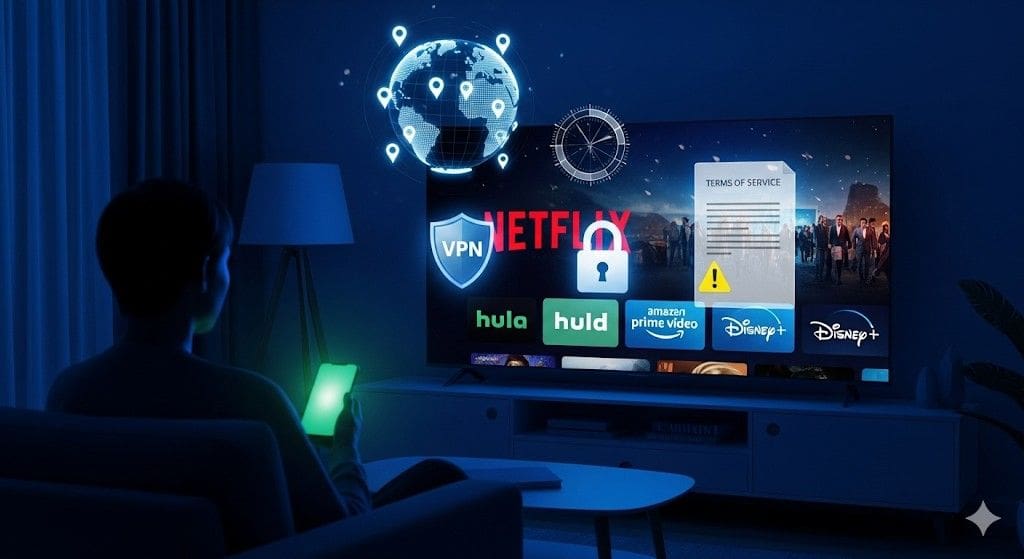
Streaming with private networks doesn’t fall into this category across most democratic nations. These tools serve many legitimate functions: protecting privacy, enhancing security, and maintaining access to content while traveling internationally.
Rather than enforcing legal mandates, streaming providers implement corporate policies when they block encrypted services.
Legal vs ToS Violation Comparison
The difference between breaking laws and violating service agreements determines the actual consequences users face.
| Aspect | Legal Issue | Terms of Service Violation |
|---|---|---|
| Consequence | Criminal charges, fines, imprisonment | Account suspension or termination |
| Enforced by | Government authorities, courts | Private companies |
| Severity | High – permanent legal record | Low – temporary service disruption |
Service agreement violations represent contractual disputes between users and streaming companies. These agreements permit platforms to suspend accounts for unauthorized access methods, though breaches don’t trigger criminal proceedings.
Consider this analogy: using a store coupon incorrectly might get the transaction refused, but won’t result in arrest.
Corporate enforcement mechanisms operate on entirely different principles than legal prosecution, creating significantly lower stakes for users. Streaming today isn’t just about what you watch, it’s also about how.
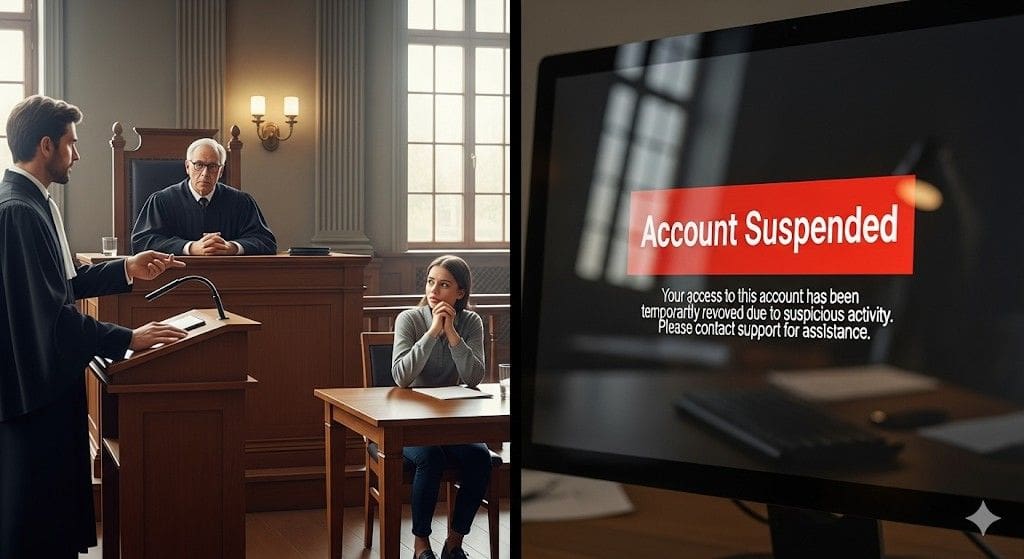
That’s why it helps to understand the difference between legal restrictions and company policies. Streaming Service Market Share continues to grow globally, making these policy distinctions even more relevant for consumers.
Are VPNs Legal In The US And Other Countries?
No federal or state laws in the United States restrict VPN usage for streaming or other legitimate purposes.
The government actually recognizes these tools as valuable for protecting online privacy and securing internet connections across various applications.
American telecommunications policy generally supports privacy-enhancing technologies, viewing them as essential components of digital security infrastructure for businesses and individuals.
VPN Legal Status by Region
Different regions maintain varying approaches to VPN regulation, creating different rules for users around the world.
| Region/Country | Legal Status | Streaming Risk Level |
|---|---|---|
| United States | Legal | Low (ToS only) |
| United Kingdom | Legal | Low (ToS only) |
| European Union | Legal | Low (ToS only) |
| China | Restricted/regulated | High (potential penalties) |
| Russia | Government-approved only | Medium (selective enforcement) |
European data protection regulations actually encourage VPN usage as privacy-enhancing technology,because the region values user privacy and digital freedom.
Countries Where VPNs Are Legal
Throughout the United States, United Kingdom, Canada, Australia, and most European Union countries, unrestricted access remains the norm.
These nations impose no criminal penalties for using encrypted networks to access streaming content.
Countries with VPN Restrictions
Several countries impose varying degrees of limitations: China, Russia, Iran, North Korea, Belarus, and Iraq each maintain different restriction levels.
North Korea represents the most extreme case, completely banning usage with potential imprisonment as punishment. In many cases, governments limit VPN access to control what people can see or say online.
Why do certain countries ban VPNs? Often, it’s about controlling information and maintaining political power through strict internet rules.
When considering streaming options, consumers often weigh accessibility against convenience, which explains why many explore Cable TV vs Streaming, to avoid the stress of solving technical issues.
Why Streaming Services Block VPNs And How They Detect Them?
Content licensing agreements create the primary motivation behind VPN blocking by streaming platforms. These contracts with content creators and distributors specify exact geographic territories where shows and movies can be legally streamed.
When users circumvent these territorial boundaries, it creates both financial and legal complications for content providers bound by regional licensing terms.
Modern detection methods have evolved into sophisticated systems that analyze IP address databases, identifying traffic patterns, and monitoring connection characteristics.
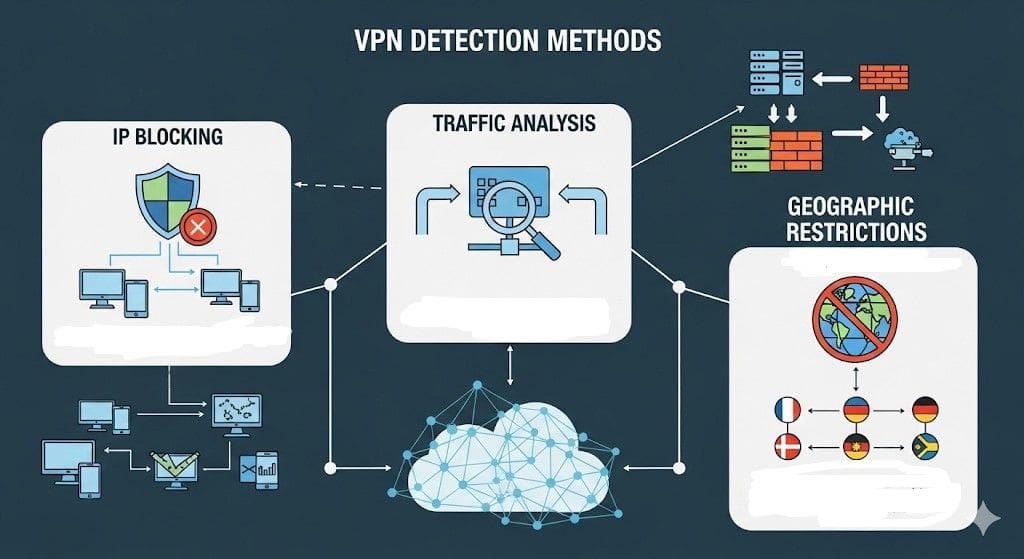
This creates an ongoing technological competition, encrypted service providers developing circumvention techniques while streaming platforms enhance their blocking capabilities.
Is It Illegal To Use A VPN To Watch Foreign TV And Sports?
Accessing geo-blocked foreign television content through encrypted networks operates within legal boundaries across most democratic countries, despite potentially conflicting with streaming service agreements.
These regional barriers exist mainly because of content licensing laws. But crossing them with a VPN usually isn’t a crime.
International broadcasting agreements create complex territorial restrictions that benefit content distributors but often frustrate consumers seeking broader access to global entertainment options.
Watching Foreign TV With VPN
Individual users in democratic countries face minimal legal implications when accessing geo-blocked content through private networks. The content itself carries no viewing restrictions; only the access method conflicts with platform policies.
International broadcasting rights create these limitations, though viewers typically face no criminal liability for circumventing geographic restrictions through VPN services.
VPN to Watch Sports
Sports streaming through private networks carries a similar legal standing compared to other content types, with service agreement breaches representing the primary concern rather than criminal activity.
Professional sports leagues and broadcasters make substantial investments in regional distribution deals, making geographic enforcement particularly critical for their business models.
There’s a lot of money in sports broadcasting. That’s why leagues take extra steps to block VPN use and protect their regional deals.
For legitimate streaming access without geographic complications, many sports fans turn to official platforms like the best NFL streaming services for reliable coverage.
Are VPNs Safe For Streaming?
Safety for streaming through encrypted networks depends heavily on selecting reputable providers with strong privacy policies and robust security features.
Quality services encrypt internet traffic, provide protection against data breaches, and maintain verified no-logs policies that preserve user privacy during streaming activities.
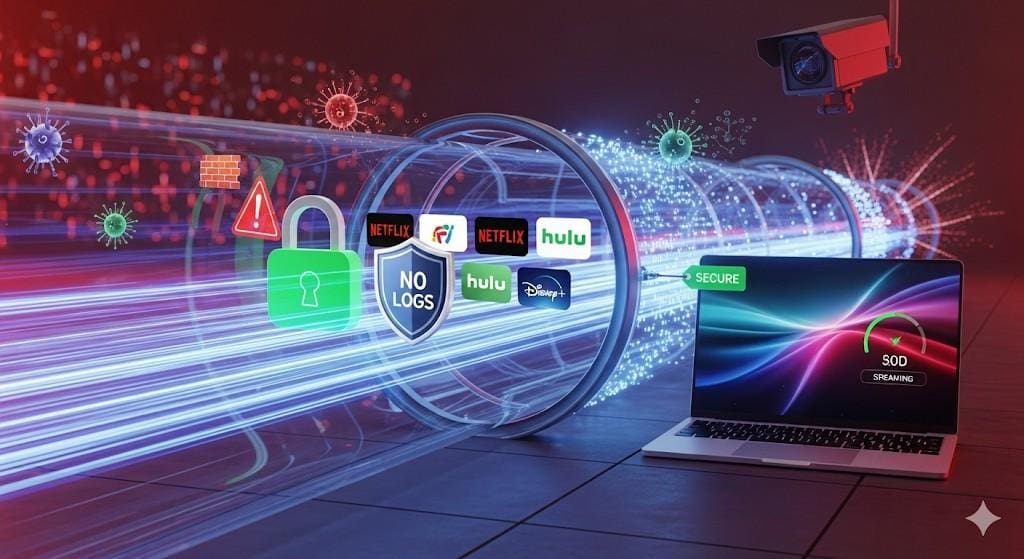
Top VPN providers focus on faster servers to keep streaming smooth and secure, ensuring smooth streaming performance while maintaining high security standards and reliable connection speeds.
VPN Security Considerations:
Safe practices include choosing providers with verified no-logs policies, utilizing servers in countries with strong privacy laws, and avoiding free services that may compromise user data for revenue generation.
Regular software updates and strong encryption protocols ensure ongoing protection against evolving security vulnerabilities.
Common safety concerns encompass potential data logging, connection speed reduction, and service reliability issues during peak usage periods.
Is It Illegal to Use a VPN for Netflix?
When it comes to Netflix, using encrypted services isn’t illegal but goes against their usage rules and could result in account suspension upon detection.
The platform actively blocks private network traffic to comply with content licensing agreements, though users face no criminal penalties for attempting to circumvent these restrictions in most democratic countries.
Netflix invests millions annually in detection technology, which makes Netflix especially hard to access with a VPN.
Netflix VPN Policies vs Legal Issues
Netflix implements some of the streaming industry’s most sophisticated detection systems, regularly updating their blocking capabilities to prevent geographic circumvention attempts.
The platform’s usage terms explicitly prohibit encrypted service usage, permitting account termination upon detection through their monitoring systems.
In addition to VPN detection, Netflix has rolled out stricter account-sharing rules as explained in the Netflix Household Update, which enforces location-based restrictions and primary household verification.
Legality of Using VPN For Other Streaming Platforms (Hulu, Amazon Prime, Disney+)
Hulu, Amazon Prime Video, and Disney+ maintain similar policies regarding private network usage, though some are stricter than others when it comes to enforcement.
Amazon Prime tends toward more lenient detection approaches, while Disney+ has made substantial investments in blocking capabilities to protect valuable content licensing deals.
Netflix’s global user base has crossed 270 million, highlighting how licensing enforcement varies across regions, as detailed in the latest Netflix Subscribers Statistics.
What Do Reddit Communities Say About Streaming With VPN
Reddit communities consistently emphasize that encrypted service streaming violations result in account issues rather than legal problems for individual users.
Real user experiences demonstrate temporary service disruptions and occasional account warnings, though no documented reports exist of criminal prosecution for streaming-related usage in democratic countries.
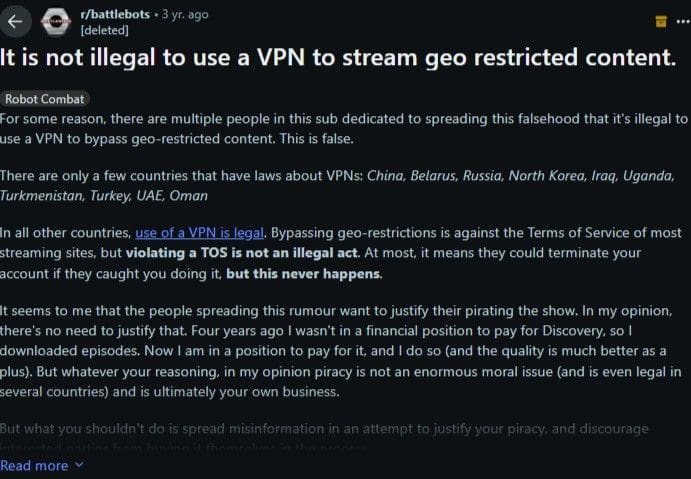
Common misconceptions include beliefs that private network streaming constitutes theft or copyright infringement, when the actual issue involves contractual violations with streaming platforms rather than criminal activity.
Community discussions regularly debunk fears about legal consequences, focusing instead on practical workarounds and service recommendations for users.
Also Checkout:
Conclusion: VPN Is Legal For Streaming In Most Democratic Countries
Across most countries, the legality of encrypted service streaming legality remains straightforward, the practice conflicts with company policies rather than criminal statutes.
Users in the United States, United Kingdom, Canada, and European Union face minimal risks beyond potential account suspension from individual platforms.
While streaming platforms continue developing detection methods, individual users can still rely on private networks to maintain privacy and secure access.
Always verify local regulations and platform policies before proceeding with any streaming activities.
FAQ
If Netflix detects a VPN, it might suspend your account temporarily. But permanent bans are rare, especially for one-time use.
Legal trouble for encrypted service streaming is extremely unlikely in democratic countries; violations typically involve platform policies only.
Streaming platforms employ sophisticated detection methods, including IP analysis, traffic pattern recognition, and database cross-referencing for identification purposes.
Changing your virtual location through private networks remains legal in most countries, despite potentially conflicting with specific platform terms.
Location spoofing itself isn’t illegal across most jurisdictions, though using it for fraud or other criminal activities remains prohibited.
